How to Build a Baller Brand, From Scratch
Toronto Tempo Chief Marketing Officer Whitney Bell shares what’s involved in building excitement and affinity for a product that doesn’t yet exist
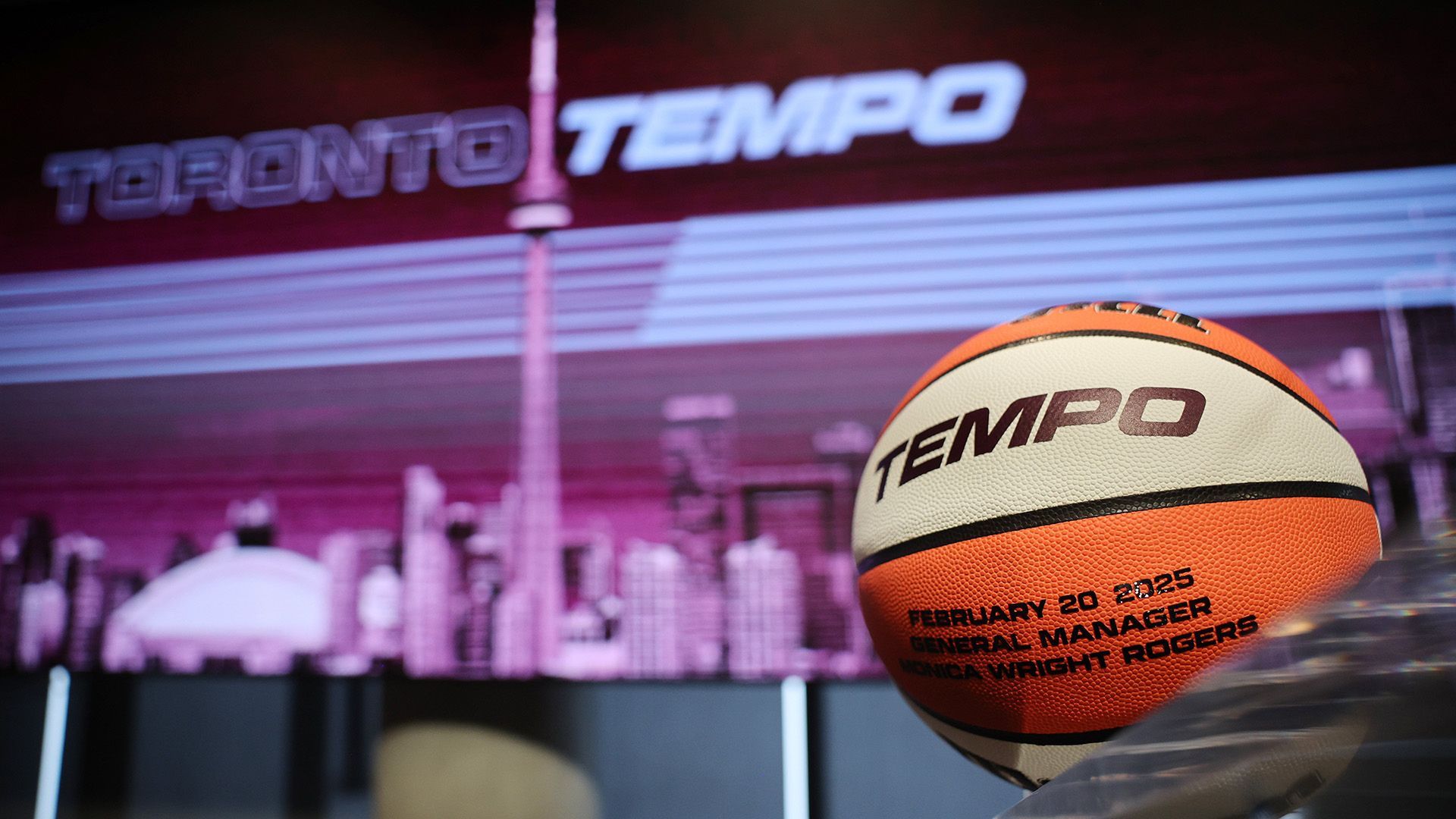
If you’ve been seeing the Toronto Tempo everywhere, you’re not alone.
Maybe you’ve seen the logo of the WNBA’s newest team on its wildly popular merch, such as the instantly sold-out limited-edition inaugural jersey (don’t worry, more are coming soon), or the punchy pullover hoodie favoured by team co-owner Serena Williams.
Maybe you’ve caught clever collaborations produced with the team’s corporate partners, such as CIBC’s uplifting ads, Sephora Canada’s “Together We Win” fan pledge, TurboTax’s “Mascot Aura Audit” crowdsourcing blitz, and Instacart’s grocery-centric explanation of the expansion draft.
Before the team had played a single game, before it had even drafted any players, the Toronto Tempo established itself as an indelible brand.
That’s no accident. In fact, it’s the result of a huge amount of work, in a relatively short period of time, led by marketing pro (and Smith School of Business alumna) Whitney Bell, BCom’08, AMBA’13. Since taking the role as the team’s first chief marketing officer in the fall of 2024, Bell has built out content, social, digital, comms, lifecycle, community and merchandise teams, steered the team’s name and logo development, and built the kind of brand equity established franchises dream of.
As Tempo prepares to tip off at its home opener on May 8, Smith Business Insight contributor Deborah Aarts sat down with Bell to talk about how to get to know the needs of a new client base, and how to build a brand around a product that doesn’t exist yet.
Your background is rich in marketing experience, but you’d never worked in sports before joining the Tempo. What drew you to this job?
Honestly, it’s my dream role. Over my career, I’ve learned that I love building from scratch: dealing with unknowns and growing something out of nothing. I like thinking differently, not approaching everything with the lens that “this is the way it’s always been done.”
I was on mat leave with my second son when the team was announced, and a recruiter reached out and asked whether I might be interested in the job. I was immediately excited about the opportunity. I grew up playing all the sports—in fact, I was on the varsity soccer team at Queen’s—and I’ve always loved supporting women’s sports. I liked the startup mentality of the whole enterprise. And I was intrigued by the building element, since you don’t often get a chance to launch a new brand in Canada. The combination was really appealing to me.
Let’s travel back in time to your first day on the job in September 2024. What did you have to work with?
I was employee number four. We had our president, chief financial officer, chief revenue officer and me. So, from day one, I was really thrown into it.
We had a looming deadline ahead of us: We had just over a month to submit our brand and logo and colour scheme to the league for approval. We didn’t have any of that yet. We didn’t even have a name.
How did you triage the to-do list?
The name was the top priority. Since we’re the first WNBA team in Canada, we were highly mindful that we were picking a name that would be very representative of both a city and an entire country. My colleagues had started a campaign a month before I began, called NameYourTeam.ca, which allowed Canadians to submit ideas, colours and inspiration. They received more than 10,000 submissions from around the world. When I got there, they’d narrowed it down to two. So my job was to map out how we’d bring either idea to life: What could the mascots look like? What would people cheer at games? What colours could work? How could it represent Toronto and Canada? That helped us get to Tempo.
Merchandise started right after that. We knew that as soon as we released the brand name and logo to the public, people would want to buy things. So I spent a lot of those early days meeting with different licensees and starting to design different products so they could be available at the launch.
How do you describe the brand identity you landed on?
The Tempo brand is premium, competitive, dynamic and modern. We’re very intentional about that. Often, Canadians are thought of more as a bit of an underdog, but our intent is to be competitive right away and the brand is meant to reflect that. We want to have nods to the history of Canada and the people who paved the path for us to get here, but we are at our core modern. And we are here to compete.
How did you decide when and how to share the brand with the public?
We planned to release our name and logo at the beginning of January of 2025. But because nothing ever goes to plan in sports, it was accidentally leaked a month early.
We couldn’t pretend that people hadn’t seen it and that it hadn’t taken off on social media. So we stayed up all night to finish the website and edit a video to the best of our ability. We knew it wasn’t perfect, but we had to go with what we had.
The launch didn’t necessarily happen the way we wanted, but in the end we probably got more publicity because of the leak, because it created so much discourse.

What have you drawn from the experiences of other WNBA teams and pro women’s sports leagues to better understand your potential audience?
The WNBA shared some data and insights with us. A lot of it was U.S.-centric, but it was a good starting point to help us get an idea of who WNBA fans are, what they care about, and trends in their behaviour.
And the other professional women’s sports leagues in Canada have been incredible. Diana Matheson (Smith Executive MBA class of 2023) of the Northern Super League and Amy Scheer of the Professional Women’s Hockey League have been very gracious with their time and their learnings. Our fan base is not necessarily the same, but they are amazing sources of feedback and advice, especially as we get closer to our first tip-off.
What else are you doing to better get to know your customer base?
We conduct brand health surveys, in which we ask our fans questions. We get a lot of insights from that. We are hosting events now and we always do post-event surveys to understand what our fans like, and what they don’t. Now that we’re selling tickets and merchandise, we’re able to collect more insights about who is engaging with us. And as soon as games start, we’ll get a lot more of it.
What are you doing to stoke up loyalty and enthusiasm for a team that hasn’t actually played a game yet?
We have a lot on the go to build up affinity. We’re planning a 360-degree national brand launch campaign for just before tip-off, to build awareness that Canada has its first WNBA team. We’ve been hosting events to build up that brand love. For example, in April we welcomed our fans to Coca-Cola Coliseum, our home arena, to have a rally, see the court and check out our dance team for the first time.
We’re also working with our founding partners—Sephora Canada, CIBC, TurboTax and, more recently, Instacart—and we’ll be announcing more before tip-off. That’s helping build excitement.
The Tempo has some very well-known backers: Larry Tanenbaum, Serena Lilly Singh, Sukhinder Singh Cassidy, Masai Ujiri, among others. What role does having such big names at the table play in getting a brand off the ground?
It’s a marketer’s dream, especially when your product doesn’t exist yet. We’ve been able to tell the stories of all these prominent individuals, who come from all different walks of life, and who want to be part of what we’re building.
How do you leverage that kind of clout without overstepping?
I had meetings with each of these owners to understand what they’d like to lean into, how involved they’d like to be, and how they can contribute authentically. Serena really wanted to lean into design of our jerseys. Lilly designated herself as chief hype officer. Sukhinder has a background in ticketing, so she offered to lean into that area. We’ve found these natural passion points that allow each owner to lean into where they can be useful to the team. They’re not just figureheads. They legitimately care about the team, and they talk to us and help us through issues.
What’s the most valuable lesson you’ve learned about building a new brand in the past year and a half?
Authenticity really is key. You need to figure out your vision, your motivation and what you stand for. You then need to make sure everything you do ladders up to that, in the outward-facing branding and how you show up in the public, and also internally: in how you act, how you treat employees and how you build a culture.
For example, one of the things we stand for is that we always want to give people a chance. That means we’re as likely to hire an up-and-comer as someone who’s “done that.” Or when we hold a press conference, we’ll try to invite journalists who don’t always get a chance to be in the room.
Integrity is another really big value to us. Whenever we’re debating something, we go back to, “Do we feel good about this? Is it at our core?”
Once you build that foundation—which we’ve spent a lot of the last year doing—it makes it so much easier to make decisions about pretty much everything.