Driving the Future of Sustainable Investing
Behnoosh Ramezani applies technical and people skills to create positive change

The world of finance is changing, and fast. The signs are everywhere (despite some rumblings about ESG backlash): More public companies are disclosing their GHG emissions. More institutions are developing strategies to balance their climate and fiduciary responsibilities. More organizations are incentivizing leaders to reach environmental goals.
As awareness of climate change rises like seawater, corporate interest in doing better by the planet is deepening, confirms Karen Jackson-Cox, executive director of the Smith Career Advancement Centre. “Businesses are increasingly seeking expertise in sustainability. They want leaders who can align environmental impact with business value,” she says. “Sustainable finance, in particular, is an area of real growth.”
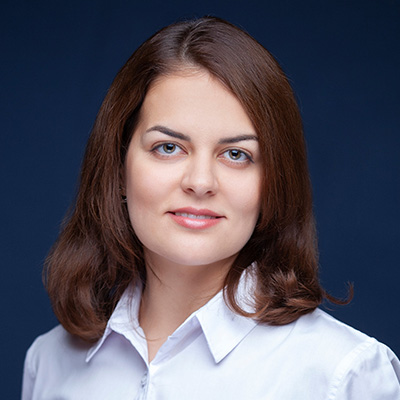
Behnoosh Ramezani (MFin'20)
Title: Manager of Sustainable Investment, OMERS
Sustainable finance is a broad field, comprising many job functions, including data and financial analysis, compliance, research, management and C-suite leadership. Those working in the space share a commitment to finding, and activating, levers of change to make commerce cleaner and more competitive over time.
That’s part of what drew Behnoosh Ramezani to the field. In the more than five years she’s been working in the space—most recently as Manager of Sustainable Investment at OMERS, one of Canada’s largest defined-benefit pension plans—she’s learned what it takes to launch and build a thriving career in sustainable finance. Here, she provides a glimpse.
How did you come to work in sustainable finance?
I’ve always been a curious person who loves to learn and make tangible impacts, and if you look at my career path that’s pretty clear. I started with a bachelor’s degree in chemical engineering, then completed a second degree in political science because I believed in making an impact through policymaking. But my first job after graduation wasn’t in policy at all, it was as a financial analyst. I’ve always been good with numbers and analysis, so I stayed in that role for five years, even though it didn’t quite feel like my calling.
I enrolled in the Smith Master of Finance program in 2019. One of the electives was in sustainable finance, and I was fortunate to take it at a time when the field was still emerging. The more I learned, the more it resonated; it combined so many of my interests: engineering, analytics, policy and working with people. I realized I could bring a unique perspective to this space.
After graduating in spring 2020, right in the middle of the first wave of COVID, the job market had completely frozen. Instead of waiting, I reached out to people across the sustainable finance ecosystem just to learn. Between April and June I spoke with 196 professionals from data analytics, investment management, consulting and sustainability. I wasn’t looking for a job; I was trying to understand the field. Those conversations gave me deep insights into how the market works and how to speak its language.
Since then, I’ve worked as a sustainable investment analyst, then as a consultant at KPMG, followed by two years at Oxford Properties, the real estate arm of OMERS. At the start of 2025, I joined OMERS’s Sustainable Investing team, a natural next step that connects all the threads of my journey so far.
How do you explain your job to others?
I explain that my role is to make investment decisions more forward-looking and responsible. I help ensure that sustainability isn’t treated as a separate conversation, but as a core part of how we evaluate value, risk and long-term performance.
What are your key responsibilities?
My work really sits between sustainability and investing. A big part of my job is helping our investment teams understand how sustainability factors (things like climate risk, data quality, or labour practices) actually connect to financial performance. For a pension plan that invests for decades, not years, those risks are very real. If you buy an office building in a flood-prone area, or a company with poor governance, you’re taking on long-term financial risk, and my role is to help make that visible and measurable.
Beyond that, I lead a lot of our enterprise sustainability work, everything that relates to how we operate as a company. I work with teams in HR, procurement, operations and communications to make sure sustainability shows up in our policies, reporting and day-to-day decisions. There’s also a big reporting and policy side to my work.
At the end of the day, my role is a mix of analysis and collaboration with people.

What about your job tends to surprise people?
People are often surprised to learn that my job isn’t about stopping investments or making things harder for the investment teams. It’s not about saying “no”, it’s about helping them make better, more informed decisions through considering the sustainability-related risks. We look at long-term risks and opportunities that might not show up in a spreadsheet today but could have a big impact in the future.
Another surprise is that sustainable finance isn’t just about the environment. Yes, climate is a big part of it, but it’s also about people: things like labour rights, diversity and community impact. When I explain that we look at issues such as child or forced labour risks in global supply chains, people are surprised to know these can still exist in investment portfolios.
What do you love most about what you do?
What I love most about my work is that it connects purpose with practicality. I’m motivated by the idea that doing the right thing and making sound financial decisions are not opposites, they reinforce each other. When I think about my nine-year-old daughter and the world she’ll grow up in, I feel a responsibility to help build systems that think beyond the next quarter.
As investors, our fiduciary duty is to deliver long-term returns for pensioners. But to do that responsibly, we can’t ignore sustainability risks, because climate, social and governance issues can directly affect a company’s performance and resilience. Integrating those risks into investment decisions isn’t about being idealistic; it’s about protecting value and ensuring that what we invest in today will still be strong decades from now.
It’s challenging work; sustainability doesn’t always fit neatly into financial models. But helping investment teams see how these factors drive long-term outcomes is what makes this job so meaningful for me.
What skills are most valuable in your work?
First, you have to genuinely enjoy change and continuous learning. The sustainable finance landscape evolves constantly. If you’re someone who thrives on stability and routine, this field can feel overwhelming. But if you’re curious and adaptable, it’s one of the most exciting areas to be in.
Second, you need to be comfortable being challenged—presenting ideas that you believe are solid, but others may disagree; maybe they see the risks differently, or they don’t want another layer of complexity added to their work. It’s important to listen, collaborate and find common ground. Patience, empathy and the ability to translate sustainability concepts into business realities are what make the work effective.
What excites you about the future of your profession?
That shift, from conversation to practical application, makes me genuinely hopeful about where we’re heading. The progress may be gradual, but it’s real. Every year, I see more investors asking the right questions, more companies embedding sustainability into their core strategy, and more data to back it all up. Change in this field doesn’t happen overnight, but it’s happening, and being part of that momentum is what gets me out of bed every morning.
What’s your best advice for people considering a career in sustainable finance?
Sustainable finance is a field that welcomes people from many different backgrounds: engineers, analysts, finance professionals, lawyers and policymakers. There’s no single path in; what matters most is curiosity, commitment and a genuine interest in how finance can be a force for positive change.
If you’re exploring this field, stay informed. Follow the news, learn the key frameworks and keep up with how regulations and expectations are evolving. The more context you have, the more valuable your perspective will be.
And most importantly, build relationships. Networking is crucial here because it’s still a relatively small and interconnected field. Every conversation is a chance to learn. Even if the person you speak with doesn’t have a role for you, they might know someone who does or guide you in a path which take you to your goal.
These reflections represent Ramezani’s personal views and experiences, not those of her employer.
