Authenticity in a Digital World
Tandy Thomas explores how influencers and followers are redefining what feels real online
In a marketplace where corporate branding is often met with consumer skepticism, social media creators have unlocked a different path: building trust through shared humanity. How does sharing one's life online transform monetization from a source of cynicism into an act of community support?
In this interview, Tandy Thomas, associate professor and E. Marie Shantz Fellow of Marketing, examines the evolving dynamics between social media influencers and their audiences. She explains that authenticity online is no longer about avoiding money, but about being open and honest when sharing personal experiences. She adds that modern authenticity also focuses less on who a person is inherently, and more on the transparency of their actions.
Drawing on changes in the digital landscape, she outlines how consumer behaviour has transformed over time. She points to how traditional brands struggle to project profit-free genuineness, whereas social media influencers thrive by turning their everyday vulnerabilities, struggles and sponsored content into a relatable narrative that audiences actively want to support and sustain.
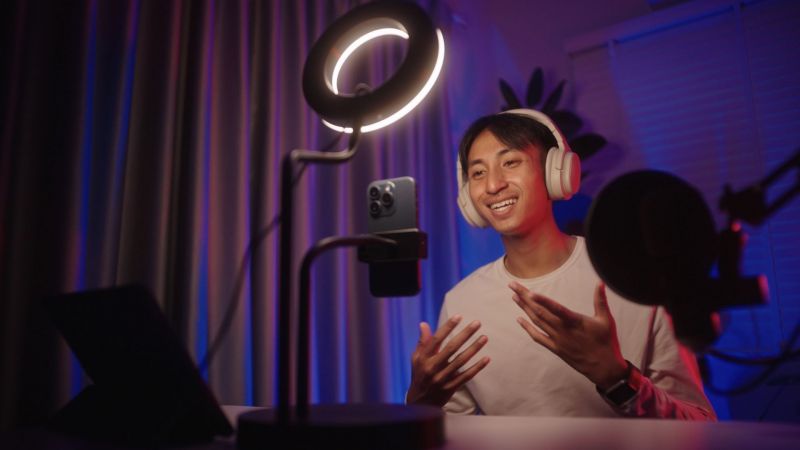
[MUSIC PLAYING]
Tandy Thomas
00:07 What is Authenticity?
The traditional view of authenticity is focused on being true and being genuine—being true to the self. So whether you're a brand, whether you're a person, you're putting forward this image that this is genuine, this is true. You are not influenced by other people. You're not influenced by other expectations. You're not influenced by profit motives.
Projecting authenticity is a huge challenge for brands because brands are motivated by profit, they need to make money. Being authentic and being motivated by profit are traditionally viewed as being antithetical to each other. As soon as someone shows us profit motive, consumers have historically said that is not authentic anymore. Classic example of this: You can think about musicians. They have this great following of loyal fans, they make it big and it's like, oh, they've gone mainstream. And mainstreaming was the kiss of death.
01:00 How have social media influencers (SMI) changed the concept of authenticity?
Social media influence has become a really interesting case to understand how our views of authenticity have changed. If you think about what's happening with a social media influencer, it's a regular, everyday person. They put their life online, they tell their stories, they build their content, but they monetize it.
They have sponsors, they push products. They do all of these things, but consumers don't react negatively to that. The audience is fully supportive of an SMI monetizing their content, which shouldn't happen if we think about that traditional view of authenticity. But it does.
01:40 How can creators come across as authentic on social media?
What we're seeing is a different kind of authenticity coming forward. And this is not authenticity that's grounded in someone holding a set of particular attributes that are judged to being true or genuine. It's a kind of authenticity that's really about what you're doing, not necessarily who you are. It's the process of sharing your life and sharing your struggles and sharing your vulnerabilities. That's what's resonating with audiences.
With that view of authenticity, the monetization becomes a supportive element, that it allows these SMIs to keep creating content. So the audience wants the content, the SMI needs the money to be able to do that because they have to afford to live, so we see this whole other set of dynamics playing out. We've always thought about life as having a backstage and a front stage, and the front stage is the image you choose to project to the world. What we're seeing now is that the backstage becomes the whole stage.
02:40 Why do followers matter to an influencer’s success?
The followers are incredibly important to an influencer's success. First and foremost, in the most obvious way, is SMIs need the count. The bigger the number of followers, the more likely they are to attract sponsors and be able to monetize it.
But what becomes more important is the relationship between the SMI and the audience, and they really work together to almost build the content. So SMIs pay very close attention to feedback from the audience, and this feedback comes in the form of comments, but also the metrics that are put forward by the platforms. And then SMIs are able to tailor their content to really meet the needs of that audience.
Now, from an authenticity perspective, that would traditionally be viewed as a no-go. It’s like, “isn't this all fake, isn't this just a performance,” but that's not how it's being received by the audience. The audience recognizes that this is a performance, but they don't care. They're not interested in this attribute-based view of authenticity. What they care about is, is this content resonating with me? Is this helping me in my life? Is this inspiring me?
03:52 What can brand managers learn from social media influencers?
When we think about the relationship between brand managers and SMIs, this needs to be viewed as a partnership. The first thing that we need to think about is how do brand managers choose which SMIs to partner with to sponsor their products. Historically, we've thought about it in terms of the size of the audience—there's the mega influencers, there's the micro-influencers.
What my research is showing is that they should also maybe think about what is the kind of content that they're putting forward. And when we find that it's this content that shows this existential authenticity, consumers are really supportive of those brand partnerships.
04:31 What does authenticity mean in the age of AI?
When we think about the influence of AI and how we understand the truth, the relationship with truth has become tenuous. It's impossible to hold on to these traditional judgments of what is real, what is not real, what is true, what is fake. So given that it's become so hard for consumers to be able to determine, is this true or is this a deepfake, the importance of that attribute-based view of authenticity is really diminishing.
So what we see in this void is these other kinds of views of authenticity moving into the cultural space. Where we can start seeing it, based on things like sharing information that is valuable, sharing information that helps, [is] with less regard for was this someone's true, genuine story, was this generated by AI, because those judgments are becoming harder and harder to make.