
Inside Leaders’ Mental Health - Virtual
Understanding and managing the psychological cost of leadership
Inside Leaders’ Mental Health - Virtual
About the program
Leadership is psychologically demanding work - yet few leaders are taught how to manage those demands.
Instead, leaders are expected to remain level-headed, decisive, and composed while navigating uncertainty, organizational change, and the well-being of others. Yet the mental health challenges leaders themselves face are often overlooked, underreported, and stigmatized.
Research shows that leadership roles can expose individuals to unique forms of strain - from constant evaluation and decision pressure to managing their own emotions under pressure and isolation. Despite this, many leaders struggle silently, believing they must appear invulnerable, fearing that acknowledging strain could undermine their credibility.
Drawing on research in leadership, Julian Barling, Borden Chair of Leadership at Smith School of Business, explores the psychological demands of leadership and their implications for leader effectiveness. Participants will be introduced to practical, evidence-informed strategies that help leaders better understand their reactions to pressure, regulate their responses, and sustain their capacity to lead.
In this program, you will explore:
- The unique psychological demands of leadership and how they affect mental health
- Common misconceptions that contribute to stigma and silence among leaders
- Evidence-based strategies that leaders can use to manage stress, regulate emotions and make more effective decisions
- Live demonstrations of exercises designed for real-world leadership challenges
Get a preview of the learning experience
Watch this recorded webinar with Julian Barling to explore key concepts and insights from the program.
Who should attend?
This program was designed for current leaders, those aspiring to leadership positions, executive and leadership coaches, HR and organizational development professionals, and mental health practitioners seeking evidence-based approaches to support leadership health and effectiveness.
Discounts Available
Volume Discounts
Queen's Executive Education is pleased to offer a 15% discount for organizations that pre-pay for five or more seats on any of our programs within a 12-month period. Check your eligibility to receive a volume discount
Registered Charities
Queen's Executive Education is pleased to offer a limited number of discounted seats in every program to employees of Canadian registered charities. Check your eligibility to receive a registered charity discount
A Recognized Symbol of Excellence
Participants who complete the program earn the Inside Leaders' Mental Health digital badge credential.
Personal and Organizational Benefits
- A deeper understanding of the psychological demands of leadership
- Insight into the stigma and misconceptions surrounding leader mental health, including common beliefs that leaders must appear invulnerable, and how these misconceptions contribute to silence around stress and strain in leadership roles
- Practical, evidence-based strategies to sustain effective leadership under pressure
- Tools to better recognize your reactions to stress, regulate your emotions, and maintain the psychological capacity needed to lead effectively during uncertainty and change
Program Content
The following topics will be explored during the session:
- How leader mental health strain manifests cognitively, emotionally, and behaviourally
- Why leaders often choose to struggle silently — and why others hesitate to intervene
- How leaders’ psychological strain affects their motivation to lead, their leader identity, and self-efficacy
- Primary, secondary, and tertiary prevention strategies
- The seven organizational dimensions that protect leadership capacity
- Metrics and early-warning indicators that leaders can monitor
Dynamic Virtual Classroom
Participate in the program from anywhere. Our online learning platform combines live, interactive video instruction with breakout sessions, panel discussions, and expert Q&A.
Our learning platform is fully encrypted, allowing you to connect securely from home, office or anywhere in between.
Virtual programs are designed to fit within your schedule, allowing you to learn new skills and immediately put them to work.
Session Leaders
Session leaders include senior professors from Smith School of Business and knowledgeable experts from industry. These outstanding teachers are constantly in touch with today's business world through real-world business experience, Board memberships and their own consulting practices.
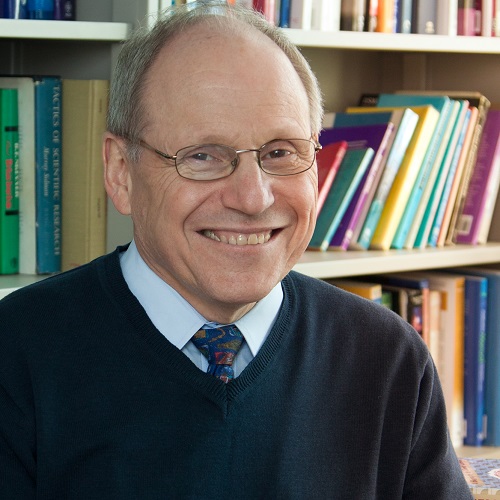
Julian is the author of The Science of Leadership: Lessons From Research for Organizational Leaders, which was published by Oxford University Press (New York) in January, 2014. He is also the author of several other recent books, including “The cognitive behavioral therapy workbook for leaders: How improving your mental health is essential to avoiding burnout and leading more effectively" (2025; with Dr. Simon Rego), and "Brave New Workplace: Designing Productive, Healthy and Safe Workplaces" (2023).
His research interests focus on the nature and development of transformational leadership and employee well-being, and he is also the author of well over 200 research articles and book chapters, and the author or editor of several books, including Employment, Stress and Family Functioning (1990, Wiley & Sons) and The Union and Its Members: A Psychological Approach (1992, Oxford University Press). He is also editor or co-editor of Young Workers (1999, American Psychological Association); and The Psychology of Workplace Safety (2004, American Psychological Association); The Handbook of Workplace Violence (2006, SAGE Publications); the Handbook of Work Stress (2005), Handbook of Organizational Behaviour (2008), all published by SAGE. He is also the senior editor of The Psychology of Green Organizations (2015) and Work and Sleep: Research Insights for the Workplace (2016), both published by Oxford University Press).
Julian was formerly the editor of the American Psychological Association's Journal of Occupational Health Psychology, served as the chair of the American Psychological Association's Task Force on Workplace Violence in 2001-2, and was the chairperson of the Advisory Council on Occupational Health and Safety to the Ontario Minister of Labour from 1989-1991.
Julian is a Fellow for the Royal Society of Canada, the Society of Industrial and Organizational Psychology, the European Academy of Occupational Health Psychology, the Association for Psychological Science, and the Canadian Psychological Association. Julian was the recipient in 2016 of the Distinguished Contributions to Industrial and Organizational Psychology by the C-SIOP Division of the Canadian Psychological Association.
Julian was named one of the 2020 recipients of the Distinguished University Professor designation, Queen’s University’s highest research-related honour. MacLean's magazine named Julian as one of Queen's University's most popular professors in 1996. Julian received the National Post's "Leaders in Business Education" award in 2001 and Queen's University's Award for Excellence in Graduate Student Supervision in 2008.
Julian received his Ph.D in 1979 from the University of the Witwatersrand, in Johannesburg, South Africa, where he subsequently taught in the Psychology Department. He joined Queen's University in 1984, initially teaching in the Department of Psychology. Julian moved to the School of Business in 1994; and served as the Associate Dean with responsibility for the Ph.D, M.Sc and Research programs in the School of Business from 1997-2011.
Upcoming Sessions
Get Notified of Upcoming Sessions
There are currently no upcoming sessions for this program. Sign up to be notified when new dates are posted.