How to Manage the Comedown
Olympic and Paralympic athletes offer advice on navigating the energetic and emotional aftermath of a major milestone

If you peddle in performance, the pursuit of career-defining peaks is part of the game. Think of the rush of chasing a big deal. Or the pressure of pursuing a promotion. Or the buzz of leading a product launch. Or the stress of organizing a tentpole event.
The lead-up to these milestones can be all-encompassing, at once exhilarating, energizing, exciting and exhausting. You can spend months—if not years—working towards a watershed moment.
Then it happens.
Then it’s over.
Then what?
If you’ve experienced a major professional pinnacle, you may be familiar with the profound, and often disorienting, energetic shift that can come in the aftermath. And, if you’re like many, you’ve struggled with the transition. “Coming out on the other side of any high-pressure experience can be tricky—especially if you’ve wrapped up your identity in the achievement,” explains Dane Jensen, BCom ’04, CEO of Toronto-based performance consultancy Third Factor, author of The Power of Pressure, and an instructor on Smith’s MBA and executive education programs. “Elite athletes know that when you overload a muscle by doing something really challenging, you need recovery time to rebuild. That balance is equally important in business situations.”
How does recovery play out in practice? What skills and habits can make the period following a major moment as healthy and productive?
Who better to answer than the rare few who know what it feels like after competing at the highest level possible, in front of the largest audience imaginable, after years of preparation? Smith Business Insight contributor Deborah Aarts spoke with three veteran Olympic and Paralympic Team Canada competitors to understand what’s involved in managing the comedown.
Front-load healthy habits
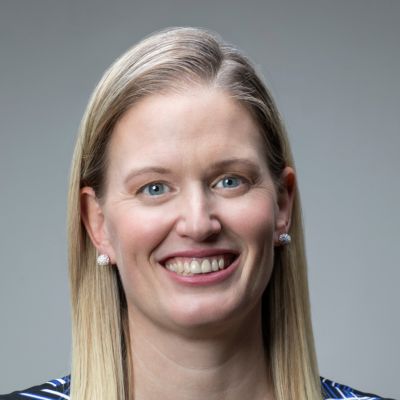
Sami Jo Small (EMBA'27)
Sport: Hockey
Olympic Games: Nagano 1998, Salt Lake City 2002, Turin 2006
Current roles: Sports Analyst, TSN; Motivational Speaker
As a goaltender, Sami Jo Small participated in three Winter Olympics with Canada’s national women’s hockey team, helping to bring home two Gold medals and a Silver. As a broadcaster, she’s been to the Olympics several more times, including the Milano Cortina 2026 Winter Games, where she covered the on-ice competition as a commentator. And as the spouse of a fellow elite athlete—Para ice hockey player Billy Bridges—she’s cheered on Team Canada at six Paralympic Games.
Small is therefore uniquely familiar with both the turbocharged lead-up to a major event like the Games—and the trough that can follow, when the hyper-scheduled culmination of years of work gives way to a relatively open calendar and a relatively light to-do list. She recalls the experience of returning to her studies at Stanford after competing in Nagano—the first Olympic Games to include women’s hockey. “There were no parades, no banners, nothing to indicate that I’d been part of this incredible, amazing thing,” Small recalls. “I came back to ground very quickly.”
Over time, Small has learned that successful navigation of the comedown starts far before the event is over. And that includes being mindful of the physical toll that intense experiences can take. “When you put everything into a big moment, it has an effect on your body,” she explains. This obviously applies to athletes, who are disproportionately prone to illness after major international competitions (Small herself contracted shingles after the 2002 Olympic Games), but it’s also a problem for professionals who burn the midnight oil—activating their adrenal systems—in pursuit of big career goals. “When you finally have time to relax after, for example, negotiating that big deal you’ve been working on forever, you can find yourself really depleted,” Small says.
Small is an advocate of maintaining good habits as she’s working through a major milestone to better equip her body—and mind—to recover afterwards. “You need to manage your health during the highs,” she says. This does involve trade-offs: Today, when Small is broadcasting a tournament—which involves high-pressure work, often at all hours of the day, often for weeks at a time—she will take proactive steps to up her odds of healthy choices. This might mean packing a bag of nutritious snacks (to avoid late-night runs to the vending machine), booking a hotel room close to the studio (so she can easily nip out for some sleep), and sometimes opting out of post-work drinks. “I’ve learned the value of balance,” she says. “Yes, you want to enjoy the moment, and yes you want to be a good teammate, but if you go hard every night it takes a toll on both your performance and your recovery.”
Proactively tending to your wellbeing won’t eliminate the doldrums that can come in the aftermath of a big event, Small says, but it can make the whole process more manageable. “It’s about thinking not only ‘How can I be at my best right now?’ but also ‘How can I be at my best in the longer term?’” she says. “That mentality makes it easier to show up afterwards for your friends, for your family, and for whatever comes next.”
Contextualize the experience
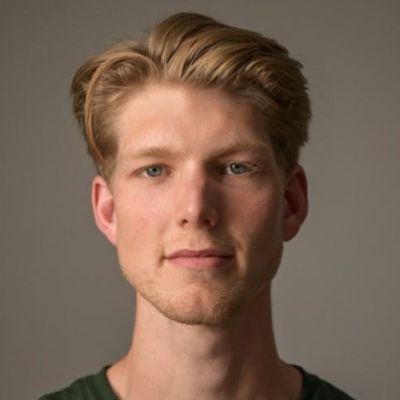
Curtis Halladay (MMIE'23)
Sport: Para Rowing
Paralympic Games: Rio 2016
Current roles: Filmmaker, Outland Story Co
In the summer of 2016, when the starting signal sounded for the mixed coxed four crew rowing finals at the Rio Paralympics, Curtis Halladay was ready for it. He and his four teammates had been working for years to get there, and he felt prepared and locked in. “The training program was so intense, and built so gradually, that by the time I got to the Games it didn’t feel monumental,” he recalls. “It felt that we were simply doing what we had gone there to do.”
Halladay left Brazil with a Bronze medal and returned to Canada to a wave of accolades. But he didn’t take any time to rest on his laurels. He’d discovered that he had a shot at Olympic eligibility and immediately got to work pursuing that goal. “I didn’t have the period of depression some people experience when they get back from the Games because I was so focused the next task,” he says. “I rode the momentum of the Paralympics and just kept training.”
It was only a year later, when a hip injury dashed his Olympic hopes and ended his competitive career, that he began to process the exceptional experience he’d been through. “That’s when the comedown started,” he says. “I stayed busy. I was working. But it was really tough. When you do something as big as competing in the Paralympics or the Olympics, it’s hard not to make it your whole identity, whether you like it or not.”
What helped Halladay through it was a subtle—but crucial—mental shift. He began to consciously differentiate what he’d accomplished from who he was as a person. “Yes, the Paralympics is something I did and something I am proud of,” he says, “but I know now that I am so much more than that moment at the peak of the pyramid. I am the attributes and characteristics that got me there.”
That outlook has helped in his post-athletic pursuits, including his work as an independent filmmaker at Outland Story Co, a production company he co-founded that makes documentary and brand films for outdoor, conservation and purpose-driven organizations. Like competitive sport, filmmaking involves intense periods of preparation that culminate in finite outputs; also like sport, it can be easy to feel rudderless after accomplishing a goal. For Halladay, contextualizing work as a verb (something he does) instead of a noun (something he is) makes the transitions far more manageable. “When you understand that you are not the film, or the medal, or whatever you have accomplished, but that you are instead everything else that got you there, it helps to remove the peaks and valleys,” he explains. “It makes it a lot easier to carry over your experiences and learnings as you work towards your next thing.”
Give yourself grace—and space
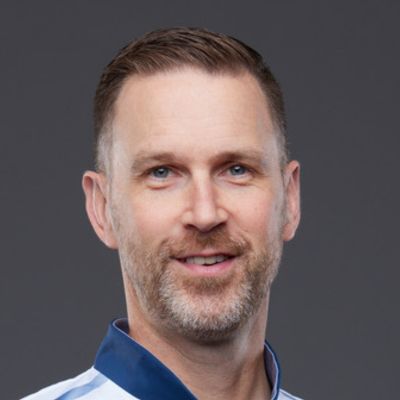
Brad Gushue (AMBA'22)
Sport: Curling
Olympic Games: Turin 2006, Beijing 2022
Current role: Franchise Owner, Orangetheory Fitness Canada; Brand Ambassador
After skip Brad Gushue led Canada’s men’s curling team to its first-ever Gold medal at the Turin 2006 Olympics, he and his rink came home to a hero’s welcome in Newfoundland, with about 2,000 fans greeting them at the St. John’s airport. “Our province and our country had got behind us so much that the celebration went on for months,” he recalls.
Many highlight-reel moments have come in the years since, including another Olympic medal (Bronze during Beijing 2022), a World Championship title (in 2017) and a record six victorious runs at The Brier (between 2017 and 2024), but the extended after-party of 2006 never quite repeated. In fact, Gushue has come to expect a rapid reality check after a big event. “When we won The Brier for the first time, I felt such pride and joy. It was pure jubilation,” he recalls. “Then I woke up the next day, and it was just another Tuesday morning. The attention was more or less gone and I had to go back to work. I remember thinking, ‘Is this what it’s all about?’ It was a huge letdown.”
Like many high-performing athletes, Gushue has struggled to manage his energy during the aftermath of a competition. “I’ve had moments when I’ve felt a bit sad that the journey was over,” he says. “I’ve had moments where I didn’t want to get out of bed. I’ve had moments where I just had nothing: no energy and no drive.”
Earlier in Gushue’s career, he railed against these feelings. “I’d think, ‘What’s wrong with me? Why am I not back in the gym? Why am I not training again?’” But as he’s matured and racked up more experiences—good and bad—he’s come to see it differently. “I’ve realized that downtime is part of the recovery process,” he says. “When you devote so much energy towards a project—in our case something like trying to get to the Olympics—you need to allow your body and your mind time to recover.” With help from coaches and sports psychologists, he’s learned to let himself feel—and to an extent grieve—the end of important experiences. “I’ve become a lot kinder to myself,” he says. “When you finish a journey, it’s normal to miss it—and it’s OK to give yourself a moment to get over it.”
Gushue is currently preparing for a different type of comedown: His rink did not qualify for the Milano Cortina 2026 Winter Games, and this season is his last before retiring from the sport. He knows the end of a chapter that has dominated his life for nearly three decades will be an adjustment. So, after he’s thrown his last competitive rock, he’s planning on lots of sleep, restorative walks in nature and, crucially, patience. “I’m going to give myself a bit of a moment,” he says. “Yes, many of the incredible things I’ve experienced over the last number of years are probably going to go away, and I know there will be a grieving process for that. But I also know different things will be coming in, and that no matter what they are, there’s going to be good moments. It will just take time.”
Smith School of Business is the official national business education partner of the Canadian Olympic Committee and Canadian Paralympic Committee, as well as a founding partner of Game Plan, Canada’s holistic athlete-support network, which helps elite athletes plan for success beyond sport. The Olympian and Paralympian alumni featured in this article were granted Game Plan Awards to pursue their post-secondary education at Smith School of Business.