What You Need to Know About People Analytics
Understanding the game plan for the new world of data-driven human resources
When HR leaders first experimented with people analytics, organizations were content to gather basic information, such as employee satisfaction surveys, to support HR systems. Today, their ambition is higher: finding ways to leverage the predictive power of analytics to make a slew of evidence-based people-management decisions.
People analytics can predict internal hiring rates, optimize leadership development by analyzing career paths and identify employee health and safety issues. Social network data—culled from email and phone records, for example—can identify influencers and innovators. But data-driven HR requires new skills, plus the ability to bring together data from multiple sources and the rigour to respect employee privacy.
Matthias Spitzmuller, of Smith School of Business, and Julio Quiceno, of Scotiabank, show how organizations can develop their capacity in people analytics. What are the real-world challenges of applying analytics to HR functions? And which strategies can overcome these challenges?
Participants learn the keys to develop a people analytics strategy, including:
- How to apply analytics to recruitment, selection, performance management and retention.
- A road map for building analytics capabilities within HR.
- Basic analytical techniques and tools used in people management.
- Where to source internal data, from Big Data (such as firm-wide compensation) to “thick” data (such as qualitive insights from interviews).
- How to win employee trust.
- What one large Canadian firm has learned about a people analytics rollout.
Following the presentation, there is a Q&A with our presenters.
This webinar is of special interest to those working in HR, people management, technology and leadership.
This webinar was recorded live on Thursday, Nov. 18 at 1 p.m. (EST).
Session Participants
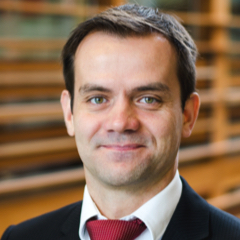
Dr. Matthias Spitzmuller

Julio Quiceno
Julio Quiceno’s team is tasked with enhancing Scotiabank’s use of HR data for decision-making. He has more than 20 years of experience in human resources in Canada and Latin America. He holds a bachelor’s degree in psychology from Javeriana University in Colombia and an MBA from McGill University.