D.D. Monieson Doctoral Fellowship
Established in memory of Professor Emeritus D.D. Monieson. Awarded to PhD students in Smith School of Business based on academic excellence and a thesis topic that contributes to our usable knowledge of a business issue of contemporary importance. Selection will be made by the Smith PhD/MSc Awards Adjudication Committee.
Latest Recipients

Brandon Legacy
Where is your hometown?
I am from Bathurst, which is a quiet town on the East Coast of New Brunswick, Canada. Fun fact: Bathurst is the birthplace of the McFlurry (the ice cream treat from McDonald’s restaurants)!
Why did you choose Smith School of Business/Queen’s?
I choose to pursue my PhD at Queen’s University because of the school’s reputation. The program’s structure was what initially caught my attention, but the caliber of faculty research and scholarship at Smith made it difficult for me to consider any other institution for my studies. Since joining, I have collaborated on various projects with my own supervisor, Professor Eddy Ng, but have also been involved with numerous research projects with other scholars, both at Queen’s and globally! The vibrant research culture has both nurtured my research interests and allowed me to develop my own network of scholars.
What has been your favourite experience at Queen’s so far?
My favourite experience at Queen’s so far has been the opportunity to present at academic conferences. I have travelled to Chicago, USA and to Copenhagen, Denmark to present work that I have done with my supervisor, and it was a thrilling experience! Being able to dilute our work into a brief presentation to a broad academic audience is not only great skill development, but a fun exercise in storytelling and knowledge dissemination. Furthermore, being able to travel with my classmates and interact with a larger academic community is so rewarding and reaffirms that I am on the right career path.
What are your aspirations after graduation?
After finishing my doctoral studies, I would love to continue working as a professor in academia. If possible, my hope is to return to Eastern Canada to teach and mentor students in these regions, while further developing my research portfolio. My hope is to conduct research that holds practical application for organizations and can drive visible and meaningful impact through intervention. I believe that I can accomplish this by leveraging both my academic and industry connections in the East Coast from before my doctoral studies, and by applying the knowledge and skills I have gained while at Queen’s.
What is one interesting fact about you?
I have a corgi named Root Beer. We got him in the summer of the first year that I was enrolled at Queen’s. Caring for him while working on my studies has required careful scheduling and discipline, but I would argue that he has benefitted my focus in graduate school. I have also brought Root Beer to campus numerous times, and he has loved making friends with all students and staff alike!
Research Overview
Brandon’s research seeks to advance our understanding of moral conflicts and how they influence organizational engagement and retention. In particular, his work focuses on members of the Canadian Armed Forces (CAF). CAF members are expected to abide by a Duty to Report policy, requiring members to report misconduct (e.g., discriminatory behaviour). However, informal social pressures may encourage CAF members to overlook such behaviours and may even penalize those who speak up. Therefore, CAF members may either neglect their Duty to Report and suffer guilt or shame as a result of their inaction, or they may speak out against misconduct and experience social backlash, thus leading to a sense of betrayal. Both options ultimately lead to psychological strain, which weakens members’ commitment to the organization and subsequently contributes to a turnover/retention problem.
Brandon has developed a theoretical framework that measures surface level behaviours (e.g., voice or silence) against internal values (e.g., low vs high prejudice) to understand different types of “moral injury” and how they develop in organizational contexts such as the one characterized by the CAF. This model will be tested by collecting data from CAF members and provide the organization with usable knowledge for how to invest in a positive culture change that contributes to greater operational readiness, while preserving the moral integrity of its members.
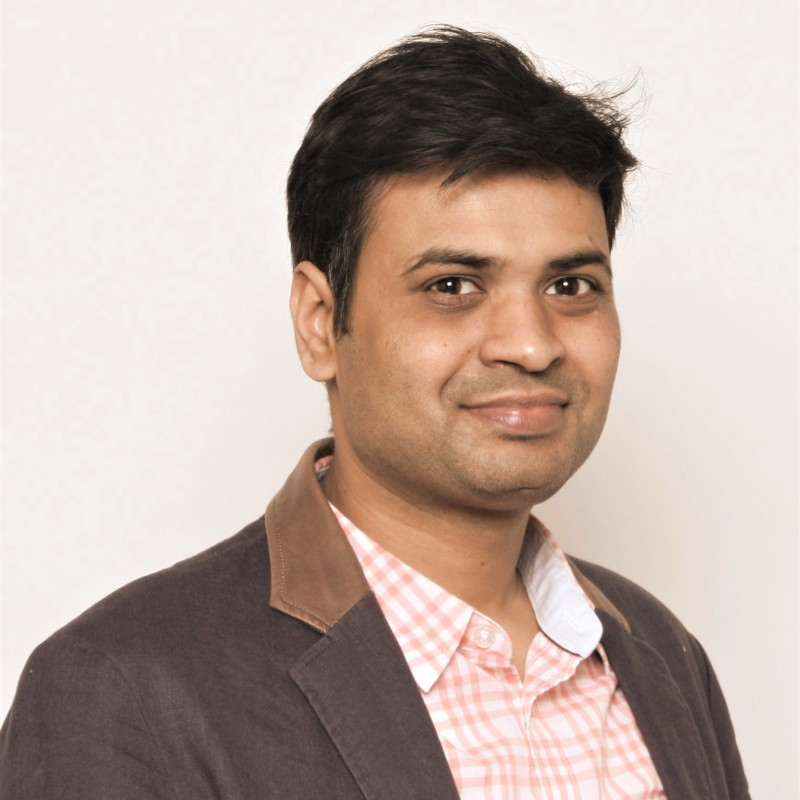
Dhruv Baswal
Where is your hometown?
I am originally from Noida, which is very close to Delhi, India. I have been living in Canada for almost 16 years, so Canada is like my second home. I lived in Toronto and Cobourg before moving to Kingston to pursue my PhD.
Why did you choose Smith School of Business/Queen’s?
I wanted to pursue my PhD in sustainable finance, and I firmly believe Queen’s is the best university in Canada to pursue programs in sustainability. Queen’s ranks first in Canada and sixth in the world in the Times Higher Education Impact rankings, which tells a lot about the university’s priorities in sustainability. At Smith, the presence of the Institute for Sustainable Finance (ISF) and faculties with an interest and research record in sustainable finance also played a major role in choosing Smith.
What has been your favourite experience at Queen’s so far?
The most rewarding experience at Queen’s has been collaborating with my supervisor, Dr. Sean Cleary, on producing impactful scholarly work in sustainable finance. My work addresses some of the major challenges in sustainable finance, such as investors’ ability to distinguish meaningful ESG disclosures, distinguishing genuinely sustainable firms and navigating uncertainty about the field’s future, considering recent backlash. If I can pick one more, organizing Indian classical music and dance events at Queen’s has been equally fulfilling. These initiatives have proven immensely valuable in broadening students’ cultural awareness and engagement.
What are your aspirations after graduation?
After graduation, I want to pursue a career in academia and continue to contribute towards the development and dissemination of knowledge on sustainability through my research and teaching.
What is one interesting fact about you?
I am a biker at heart and have been riding motorcycles since my undergraduate days. I have explored the Himalayas extensively on my motorcycle — riding places like Khardung La, the world’s highest motorable road at 17,500 feet (a height the same as that of the Mount Everest base camp and higher than that of the highest peak in the Rocky Mountain, which is at 14,400 feet); a remote village in India at 14,000 feet, and to the world’s highest gas station in Kaza at 12,000 feet, among many more.

Milad Mirzaee
Where is your hometown?
I was born and raised in Bojnurd, a city in northeastern Iran, similar in size to Kingston. I lived there until I was 17, when I moved to Tehran—the capital of Iran—to pursue my studies.
Why did you choose Smith School of Business/Queen’s?
To pursue my PhD, I decided to study abroad and chose Canada for its multicultural environment and welcoming academic community. Among Canadian universities, I selected Smith School of Business because of its diverse student and faculty backgrounds, exceptional research opportunities, and strong reputation in the field of business analytics. During my first interview with my supervisor, Professor Guang Li, I was deeply impressed by her insightful perspective and the school’s collaborative research environment. The combination of top-notch research and supportive faculty made Smith the ideal place for me to continue my studies.
What has been your favourite experience at Queen’s so far?
My favourite experience at Queen’s has been working with my supervisor, Professor Guang Li. From the very first day, she has been incredibly patient, even when I asked what felt like a simple or naive question. Whenever I needed help, she was always there to provide guidance and support. Her mentorship has not only helped me grow as a researcher, but has also made my PhD journey much more rewarding.
What are your aspirations after graduation?
Before starting my PhD in Business Analytics, I worked in industry, where I developed a strong interest in using data to solve practical problems. After completing my PhD, I plan to return to industry, where I can apply my advanced research skills to make a greater impact. With the knowledge and experience I’ve gained during my time at Queen’s, I’m excited to contribute to data-driven projects that drive innovation and create real value for businesses.
What is one interesting fact about you?
I love solving puzzles and spend time each day working on them. I find the process of breaking down complex problems and discovering patterns both fun and rewarding. It’s a hobby that reflects my passion for problem-solving in my academic and professional work.
Research Overview
Incorporating Customer Behavior Insights into Revenue Management
Milad’s research in Revenue Management (RM) addresses key limitations in traditional Discrete Choice Models (DCMs) by integrating practical insights from his industry experience. His work focuses on three critical areas: incorporating multi-item purchase behavior to improve assortment, pricing, and inventory decisions; addressing the paradox of choice by balancing the benefits of variety with the challenges of decision overload; and developing a novel algorithm under the Mixed Multinomial Logit (MMNL) framework to account for customer heterogeneity in joint pricing and assortment optimization. By bridging theoretical advancements with real-world applications, Milad’s research offers innovative solutions to enhance business decision-making, and drive meaningful improvements in RM practices.

Ali Ahmadi
Where is your hometown?
I was born and raised in northern Iran, in the city of Sari, nestled along the southern shores of the Caspian Sea. My academic journey began with a foundation in mathematics and physics during high school, followed by a bachelor’s degree in mechanical engineering and later an MBA in Strategy. Three and a half years ago, I embarked on a new chapter by immigrating to Canada to pursue a Ph.D., a step that has allowed me to chase my dream of becoming a researcher in strategic management.
Why did you choose Smith School of Business/Queen’s?
My decision to join the Ph.D. program at Smith School of Business was driven by my deep admiration for the research of Professor Andrevski. His work had already shaped my own research interests, so the opportunity to have him as my supervisor was both thrilling and humbling. He and his colleagues are pioneering in shaping what we know of strategy and strategy-making in inter-firm rivalry.
What has been your favourite experience at Queen’s so far?
One of my most cherished experiences at Queen’s has been collaborating on a research project from its very inception to the revision stage, alongside a former Queen’s Ph.D. student—someone I had long admired. Now a professor in North Carolina, he has not only been a mentor but has also become a research colleague with whom I continue to work with on exciting projects.
What are your aspirations after graduation?
Looking ahead, my primary aspiration is to pursue an academic career, and I am currently applying for assistant professor positions across Canada. However, as an international student from Iran, the academic job market presents significant challenges. With U.S. opportunities largely inaccessible due to visa restrictions and the Canadian market favouring citizens and permanent residents, the path is undoubtedly competitive. Yet, I remain confident in my ability to navigate these obstacles. Beyond academia, my research holds profound practical implications. I envision businesses and public institutions leveraging our model of competitive surprise to enhance their strategic and tactical planning. In the long run, I see potential in translating this research into a boutique consulting firm specializing in strategic decision-making for organizations.
What is one interesting fact about you?
An interesting fact about me is my deep connection to languages. Growing up in a diverse cultural environment with multiple languages spoken at the same time, I developed a passion for linguistics and have learned more than six languages. This year, I embarked on a new challenge—learning French—and I am currently preparing for the TCF exam, aiming for a B2 certification this Summer.
Research Overview
Ali’s dissertation research explores competitive surprises — unexpected actions initiated by a competitor that cause a sense of astonishment, confusion, or threat. These actions can disrupt competitors, delay their responses, and create significant competitive advantages. Despite their prevalence, competitive surprises remain understudied in management research, particularly regarding how firms initiate and respond to them. In his dissertation, he developed a definition, a typology, and a theoretical framework, followed by creating a measure of competitive surprise and conducting an empirical analysis using large datasets, while also contributing as a second author to two side research projects beyond his primary dissertation work.