How Indigenous Finance Is Rewriting the Rules of Canadian Banking
The odds may be stacked against Indigenous-owned businesses, but specialized lenders are proving character-based lending works. Will mainstream banks follow their lead?
Canada’s Indigenous economy is surging, fuelled by a young and entrepreneurial population. As the fastest-growing and youngest demographic in the country, Indigenous Peoples are driving a wave of new business creation that is reshaping local and national economies. Over 50,000 Indigenous-owned businesses across Canada now contribute to every sector of the economy. According to Statistics Canada, Indigenous gross domestic income was about $60.2 billion in 2022, nearly double from a decade ago. Employment of Indigenous Peoples has jumped almost 30 per cent between 2012 and 2022, more than twice the overall Canadian rate.
Despite this momentum, a gap remains: Indigenous Peoples make up about five per cent of Canada’s population but account for a little more than two per cent of national gross domestic income. The National Indigenous Economic Strategy for Canada attributes this disparity to four interconnected factors — people, lands, infrastructure and finance. Among these, finance stands out as a key area of concern, with the Assembly of First Nations estimating an approximately $350 billion funding shortfall in housing, infrastructure and economic development.
Here are three key contributors to the financing gap:
Structural barriers: Section 89 of the Indian Act prevents reserve land and property from being seized by non-Indigenous lenders, effectively barring First Nations from using it as collateral. Inuit and Metis entrepreneurs face comparable financing barriers under distinct land-tenure regimes. As a result, First Nations and Inuit-owned firms have only been able to access about one-tenth of the financing available to comparable mainstream Canadian businesses, whether from market or government-backed sources.
Institutional bias and weak financial networks: Many Indigenous entrepreneurs say they lack strong relationships with mainstream banks and encounter systemic bias. According to the Bank of Canada’s 2024 Survey of Indigenous Firms, only eight per cent of Indigenous businesses used loans from financial institutions as their main source of financing, compared with 31 per cent of non-Indigenous small businesses. Even when they seek credit, their loan approval rate is roughly 58 per cent – far below the 90 per cent approval for non-Indigenous businesses.
Geographical and infrastructure challenges: Connectivity is often limited — many communities lack reliable high-speed internet, digital backbone or cellular service. Basic utilities, clean water and all-season roads are often missing or under stress, making community operations and business development much more difficult. For example, nearly 70 per cent of First Nations reserves are located more than 50 kilometres from the nearest regional hub where individuals can access resources and services. This geographical barrier increases the expense of transporting goods and delivering services.
Creative ways to unlock capital
Traditional financial institutions are often seen as having failed to address these barriers — some observers argue they have even reinforced them. In response, Indigenous organizations have spearheaded several financial innovations, whether independently or in collaboration with government institutions, to unlock access to capital.
These institutions aren’t just moving capital — they’re strategically working around structural barriers. To make capital more accessible for Indigenous businesses, Indigenous financial institutions provide character-based lending — evaluating borrowers on their track record, reputation and community ties rather than conventional collateral requirements. This model has been successful: The First Nations Finance Authority has leveraged strong risk-management mechanisms to maintain a track record of low credit losses among its borrowing members.
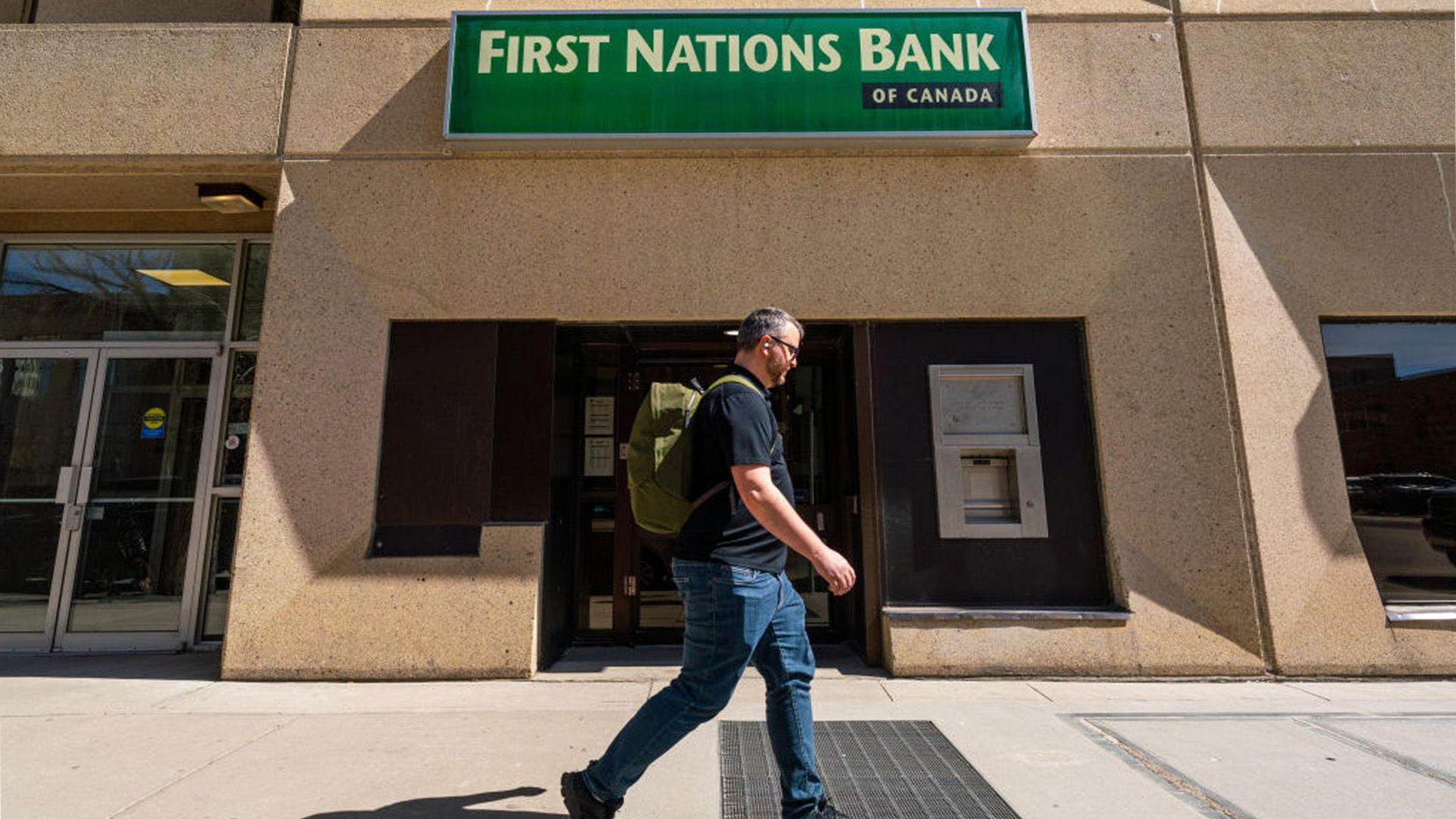
Indigenous banks and trusts like First Nations Bank of Canada and Peace Hills Trust, as well as Indigenous-led investment firms like Raven Indigenous Capital Partners, offer community-based financial services in remote areas often underserved by mainstream institutions, blending digital platforms with in-person services to overcome geographic and connectivity barriers. Compared to traditional financing institutions, these Indigenous financial institutions have focused on developing the institutional infrastructure that supports Indigenous prosperity. Their cultural competency, accountability to communities, and longstanding relationships set them apart.
As a result, Indigenous financial institutions are mobilizing increasing amounts of capital, and their rapid growth signals strong investor confidence and community demand. Likewise, government support has been on the rise. The creation of the Indigenous Growth Fund is just one recent example of a shift in perspective, demonstrating that the Canadian government acknowledges that Indigenous financing institutions can make the best use of capital necessary for economic reconciliation. There is also growing interest in sustainable and social bonds that embed Indigenous leadership and deliver direct community benefits, as reflected in the Indigenous Sustainable Bond Framework proposed by Addenda Capital.
The “missing middle” needs help
While progress has been made, Indigenous financing mechanisms remain far from matching the scale of Indigenous economic potential. One group that faces particularly challenging barriers is the “missing middle” — Indigenous-owned businesses generating $5 million to $20 million in annual revenue. They generally are too large to qualify for microloans from most Indigenous financing institutions. But many also find it hard to access the scale of capital required for growth. As Indigenous-owned businesses develop resources and assets, such as land, that cannot be leveraged as collateral due to structural barriers (e.g., the Indian Act for First Nations or collective land regimes in Inuit regions), mid-sized firms are left with few options to secure financing and are often compelled to seek alternative forms of capital. As a result, even the most successful of these businesses fail to reach their full potential.

Still, it is surprising that the “middle” is effectively “missing.” With a relationship-dependent business model, none of the Big Five banks appear to have earned the loyalty of this critical segment of the Indigenous economy. Surveys show that 87 per cent of Indigenous entrepreneurs place greater trust in Indigenous-controlled lenders such as Indigenous financing institutions and Métis Capital Corporations than in mainstream banks. The trust goes both ways and seems well-placed. The First Nations Finance Authority, for example, has posted zero defaults on over $1.6 billion in loans, providing financing to First Nations on terms that mainstream Canadian banks would either consider too risky or price at uncompetitive rates.
By applying more flexible, culturally informed credit approaches, Canada’s big banks could unlock growth for Indigenous enterprises that are currently constrained by rigid lending standards. Greater engagement by mainline banks would not only inject significant capital into a segment with proven business models, but also catalyze job creation, supply chain development and community reinvestment. And retaining such high-performing clients would provide banks with a sustainable, expanding portfolio.
Reconciliation and economic renewal
The entire Canadian economy could benefit from the rise of the Indigenous economy. Beyond our government’s multiple commitments to reconciliation—such as the United Nations Declaration on the Rights of Indigenous Peoples Act and the Truth and Reconciliation Commission’s Calls to Action—closing the financing gap has proven to deliver substantial economic returns. The First Nations Finance Authority, for example, has built a loan portfolio exceeding $3 billion, supporting consistent and predictable financing for its 183 member First Nations. This lending has generated an estimated $6.5 billion in national economic output and created more than 32,000 jobs across Canada.
While access to capital is only one piece of the puzzle, it is foundational, narrowing gaps that have persisted for generations. Adequate, appropriately structured financing enables Indigenous businesses to grow, create jobs and generate wealth that can be reinvested in education, housing, infrastructure and community wellbeing. By unlocking the “missing middle” and strengthening Indigenous financial institutions, a cycle of economic self-determination can be set in motion, reinforcing progress in social, cultural and political spheres.
With Canada’s growing Indigenous population poised to play an increasingly central role, investing in Indigenous workers and businesses is not only a matter of reconciliation but also of long-term economic resilience. For big banks, supporting the Indigenous financing space could be seen both as a responsibility and as a strategic opportunity. In this way, closing the capital gap serves as a powerful lever for systemic change, benefiting both Indigenous Peoples and the economy as a whole.
Daniel Hudson is a recent Bachelor of Commerce graduate from Smith School of Business at Queen’s University, where he researched Indigenous financing mechanisms as a Research Assistant. He is now working as a junior associate in the structured and project finance group at Export Development Canada.
Juan Francisco Chavez R. is an assistant professor of sustainability, strategy and organization at Smith School of Business, Queen’s University. Juan Francisco’s research focuses on how businesses can create value for both the organization and society.
Shawn Blankinship, MBA, CPA, CA, is an Nlaka’pamux finance and analytics professional, published academic scholar, and founder of Seven Generations Analytics Inc.—an Indigenous-led firm dedicated to making Indigenous data accessible, trustworthy and transformative for governments, industry and communities.
Emily Salmon (Unxiimtunaat) is a Cowichan Tribes citizen, Smith Accelerated MBA alumna, and an assistant professor of business and society at Simon Fraser University’s Beedie School of Business. Her work examines how Indigenous worldviews shape business strategy, structures and education.