
Risk and Disclosures

In Carney's hunt for global investment, Canada needs climate clarity
"Credible, comparable data on climate risks and impacts from Canadian firms is the big missing piece" in Canada's sustainable finance framework, write Yrjö Koskinen and Dan Tisch in the Toronto Star. "With bipartisanship, federal-provincial cooperation and business/government collaboration in vogue again, it’s time to get Canada back in the game."

From U.S. Dependence to Global Capital: The Role of Climate Disclosure
With the U.S. trade relationship fraying, it is vital for Canada to attract other global sources of capital. New ISF research examines how climate reporting firms benefitted from foreign investment shifts following the Liberation Day tariff shock. The report adds to evidence supporting the positive impact of disclosures on capital markets.

Will mandatory sustainability disclosures strengthen Canada’s capital markets?
Canada is lagging much of the world in developing requirements for corporate reporting on climate-related issues. What is lacking is clarity on the potential costs and benefits. To inform this discussion, a new ISF Briefing Note reviews the impact on markets of sustainability disclosures in other jurisdictions, and of previous financial and governance disclosure requirements such as those following the Enron scandal and 2008 financial crisis.

Why ESG-based pay often falls short — and how to fix it
When firms tie executive bonuses to environmental and social goals, they often assume that measurable targets will produce measurable impact. But poorly designed incentives can encourage ‘hitting the target while missing the point.’ Here’s how boards can design ESG-based pay systems that actually work.

Sentiment and Sustainability
Since the 2024 presidential election, the United States has seen a nationwide shift in the political and regulatory environment surrounding ESG, but how do industry executives really view these changes? New ISF research examines the language of U.S. corporate filings and reveals divergent paths for management priorities on DEI and the environment.

Canadian Corporate Performance on GHG Emissions, Disclosures and Target Setting: Fourth Edition
ISF has once again taken the pulse of climate commitments among S&P/TSX Composite Index companies, analyzing trends revealed by their GHG disclosures and net-zero targets.

Taking the temperature on corporate Canada’s climate commitments
This expert panel discussed challenges Canadian firms are facing in making more sophisticated and higher quality climate-related disclosures, and reducing their emissions.

From Ambition to Accountability
ISF research shows there has been a sharp rise in the use of environmental goals by corporations when they’re determining executive compensation. But there is still work to do to connect those incentives to real-world climate action.

Double Materiality
Double materiality is an accounting principle proposing that entities should not only report on the environmental factors that impact their bottom line (financial materiality), but also on the material impacts that a company may have on people and the environment (impact materiality).

Toxic Assets: Divestment of Polluting Firms’ Bonds by Institutional Investors
Pollution can cause serious harm to the environment and human health, and risk for investors. ISF research reveals that institutional investors divest their holdings of polluters’ bonds following significant toxic release events.
Experts
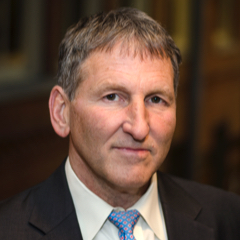
Sean Cleary
ISF Research Fellow and Professor of Finance, Smith School of Business, Queen’s University

Julie Bernard
ISF Research Fellow; Assistant Professor of Sustainable Finance, School of Environment, Enterprise and Development (SEED), University of Waterloo

Hongping Tan
ISF Research Fellow; Professor of Accounting, Desautels Faculty of Management, McGill University

Pierre Chaigneau
ISF Research Fellow; Associate Professor & Commerce '77 Fellow of Finance, Smith School of Business, Queen’s University

Sean Geobey
ISF Research Fellow; Associate Professor School of Environment, Enterprise and Development (SEED), University of Waterloo

Prateek Sood
Research Associate, Institute for Sustainable Finance

Climate science for business decision making: A meeting of the minds on the climate transition
Assessing the threat of environmental disruption can be confusing, time consuming and expensive. For this webinar event, Dr. Tanya Fiedler, a pioneering expert in the field of climate risk accounting, joined us in conversation with Scotiabank’s Meigan Terry to help business leaders who are grappling with the uncertainties of climate change.

Financed emissions
This primer article examines how financial institutions are tracking the GHG emissions that result from their investing and lending activity in an effort to decarbonize their portfolios.

Scope 1, 2 and 3 GHG emissions
To get the full picture of their climate-related risk, firms need to track direct emissions from their operations and indirect emissions from their value chain. This can be challenging and many companies are struggling to capture this information.

Partial Disclosure: Assessing the state of physical and transition climate risk disclosure in Canada
This study demonstrates that climate-related disclosures by Canadian companies are inadequate, both in terms of quantity and quality. The solutions are complex, but manageable if approached cooperatively, with clarity of intention, and with strong regulatory leadership and support.

Financing Climate Change Adaptation and Resilience
While the benefits are enormous in terms of costs and damage avoided, the payback for private-sector investments in climate adaptation and resilience infrastructure is not clear. This ISF Briefing Note clarifies this challenge and potential solutions.

The State of Corporate Sustainability Data in Canada – Survey Results
ISF surveyed its network to better understand the state of sustainability data, and found it lacking. To get to net zero, financial institutions, regulators, investors and other stakeholders will need better quality information and data about corporate GHG emissions and climate risks.

The Physical Costs of Climate Change, A Canadian Perspective
Canada is highly susceptible to the impacts of climate change in various warming scenarios, according to ISF research. The total value of capital output lost is estimated to range from $2.773-trillion with 2°C warming by the end of the century, to $5.520-trillion under a 5°C warming scenario, figures that are much higher than investments required to get to net zero.